Thursday, December 18, 2014

A Downy Woodpecker Christmas

When the weather starts to get cold we drain our fountain, cover it and move the bird feeder into the backyard in front it, where we can watch the birds better.  The bird feeder creates quite a spectacle, attracting not only the usual sparrows, but mourning doves, blue jays and pairs of cardinals.  They feed in groups from it, cluster around it on the ground and sit on top of the fountain before swooping in.  This year we bought suet with nuts embedded in it to put into the wire cages on the sides of the bird feeder, to see if we could attract woodpeckers.  We did.

A large red-bellied woodpecker (oddly named—they have a distinctive red head but their bellies are tan) is a regular customer, and just recently a downy woodpecker showed up.  I’ve been trying to get close enough to get a good photo of the bird feeder with the downy woodpecker on it, but they’re temperamental things, and every time I so much as step outside the little guy flies off.  I had to settle for the shot through the window at left.

The downy woodpecker, pictured in the stock photo at right, isn't considered a truly exotic bird, but I haven’t seen one in many years.  It was certainly exotic for me as a kid growing up in my small town of Mt. Tabor in New Jersey.  Mrs. Stickel, our second grade teacher, gave our class an art and nature project in the fall of that school year, in which we were charged with making the bird of our choice out of papier-mâché.

We were to use the cardboard center of a toilet paper roll as a form, so that meant the bird had to be fairly small.  (Although Neil Hutchinson settled upon a flicker, which is about the size of a small crow.  I have no idea what he used for the center of it because paper towel rolls weren’t that common back in the day.  Maybe he just used a ton of papier-mâché.)

Mrs. Stickel marched us down to the library where we scoured reference books of different birds.  Inside Audubon's The Birds of America I found a plate with the downy woodpecker.  I’d never see anything like it: a white back; checks and spots of black and white on its wings; a distinctive red dot on the back of a black cap atop its head; the sides of its head white with black ovals around its eyes like Petey, the dog on the Little Rascals; and a tiny beak the bird books call a “bark-sticker.”  The downy woodpecker was to be my fall project.

I seem to recall the project took us the better part of two months, working in the back of the school room for about an hour every other day, applying layers of papier-mâché and waiting the requisite time for it to dry before reapplying.  Then attaching the wings and beak, and finally painting.  By the time Thanksgiving rolled around, I was the proud owner of a decent replica of a downy woodpecker.

About two weeks before Christmas that year I woke up to an early snowfall.  I came downstairs and looked out a side window of 89 St. Johns Avenue, itching to get at six inches of wet snow, perfect for making snowballs.  And on mom’s bird feeder in the backyard, there it was in the flesh—my first downy woodpecker.

He perched on the suet, poking his beak into it, working with frenzied movements of his head as if he was afraid another bigger bird would run him off before he got enough to eat.  He pecked at a few sparrows to shoo them away and returned to jabbing at his food.  I ran into the kitchen to bring mom into the dining room to show her, but it had flown off by the time we got there.  I didn’t see it again that entire winter, but I’ve always remembered that first look at a downy.  Even today, seeing one reminds me of the beginning of the Christmas season.  Happy Holidays.


Monday, September 22, 2014

Prayers for Russ

August 7th was the last time I went for a run with my workout buddy, Russ.  We did four miles in a local park, then had breakfast afterward at a diner.  Ironically, one of the things we talked about over breakfast was accidents and health insurance—in the previous weeks I had fallen off a ladder, my father-in-law, Jack, had broken his leg, and my wife, Manette, had badly pulled a muscle, all doing mundane things in our backyard.

That afternoon, Russ took his daughter to the beach on Long Island.  Russ went for one last dip in the water, dove in and hit a sand bar.  He fractured his C-1 and C-2 vertebrae and now he’s paralyzed from the neck down.

I met Russ about six years ago shortly after I joined Mr. Bill Fitness, the local gym where we both work out.  You get to know everybody at MBF right away, even if you don’t want to.  You don’t have much choice; it’s a small gym.  More than that, it’s social, and Mr. Bill is a great motivator and trainer.  He’s created an environment in which everybody both razzes each other and pulls together to support each other’s fitness and health goals.

Russ and I became workout buddies about 5 1/2 years ago.  Mr. Bill held an evening meeting, attended by most of the core group of gym rats, for each of us to figure out some way to support Russ’ goal of quitting smoking.  My commitment was for Russ and me to do a buddy workout together every other week with Mr. Bill.  Ever since, every other Wednesday Mr. Bill has put us through the ringer for an hour with a series of exercises—free weights, floor exercises, aerobics, weight machines, calisthenics—that make our muscles feel like wet noodles by the time we’re finished.

Most recently, Russ and I were teammates in MBF’s Summer Meltdown Challenge, in which a group of two-person teams kept track of our aerobic minutes, buddy workouts, weight training sessions, etc. for about a month, in friendly competition that kept us all motivated.  Russ and I were always team members in MBF’s annual Holiday Weight Maintenance Challenge in which four- or five-member teams keep up our fitness goals and our weight from getting out of control from just before Thanksgiving until the first week of January.  And Russ and I were always team members on the Jersey Shore Relay Marathon run from Seaside Heights to Asbury Park each spring.  That’s Russ in the photo at left, mugging for the camera as he finished his 6.2-mile leg of this year’s race.

The first time a group of us from MBF saw Russ after his accident he was still flat on his back in the hospital out on Long Island, pretty doped up from one of his many surgeries, with ventilator and feeding tubes coming out of his mouth.  He was unable to speak but was responsive to us with his eyes.  Now he’s at a world-class rehab facility in northern New Jersey, sitting up in a wheelchair and the tubes have been inserted directly into his trachea and stomach, so he’s able to talk by timing his words with the rhythm of his ventilator.  He’s still Russ: his self-effacing sense of humor, his positive attitude.  He can move his neck and has his normal facial expressions.  Most important, his mind is 100%.

All of us at Mr. Bill Fitness have gotten over the initial shock but are still quietly heartsick.  We’re all pulling for him, visiting as often as we can, sending cards and goofy gifts, and Mr. Bill films videos on his iPhone of us cheering him on.  Even those of us who aren’t much at praying are giving it our all in the effort for his recovery.

That’s the reason for this blog: if you have prayer circles, prayer chains or whatever you call them, and if you’re particularly good at it, or even if you’re not very good at it all, any and all prayers would be appreciated.  I’m still shooting for the moon in mine, asking for a miraculous full recovery, but I confess I’d settle for him breathing on his own and being able to use his upper body again.  Please pass this link around for others to pitch in.  Our buddy needs the help.

February 2015 Update:

Russ recently underwent a groundbreaking new surgery to attach a pacemaker-type device to his diaphragm that will electronically tell his diaphragm muscles to cause him to breathe without his ventilator. The other day he spent five full hours off his ventilator using the diaphragm activator, and his goal is to be able to breathe entirely on his own within the next few months. He's moving out of the rehab at the end of the month into a local apartment with another challenged roommate and a full-time health aide.

We have sponsored a gofundme page for Russ to try to help him raise the money to buy a motorized wheelchair that he can operate himself using a joystick in his mouth, which will give him some degree of independence in his new life. We can't fund it entirely ourselves, so if you're inclined to help, please go to his page here and give what you can.  Thank you. 

Tuesday, July 22, 2014

You Can’t Make This Stuff Up

Preet Bharara, U.S. Attorney for the Southern District of New York, was on a roll until earlier this month.  He’d successfully prosecuted 85 insider trading cases, including sending Raj Rajaratnam, head of the Galleon Group of hedge funds, to jail for 11 years.  This month, Bharara lost against Rajaratnam’s younger brother, Rengan.  He lost in part because the judge threw out two insider trading counts, and along with them much of the evidence.  Commentators suggest that evidence would've caused jurors to convict Rengan if they had been allowed to hear it.

Still, think about it: 85 to 1.  That’s an amazing batting average.  It’s also startling that Bharara had 85 cases for which he was able to amass enough evidence that he could prosecute them.

I can remember back to a time when, as a young investment banker in the 1980s, I thought I'd seen everything with insider trading cases.  That was during the era when Rudy Giuliani had Bharara’s job as top Wall Street prosecutor.  It was the era when Ivan Boesky paid a $100 million fine and went to jail for trading on inside information.  When Dennis Levine got sent up the river for trading on inside information on his investment banking firm‘s deals, and for cutting his friends in on the action.  When Marty Siegel, who had tipped Boesky on his firm's deals—and took a (big) briefcase containing $700,000 in cash from Boesky for it one night—went to jail and lost everything in fines.  When Mike Milken paid a $600 million fine as part of a plea bargain on securities and tax violations.

In those days I was naïve enough to think that after that era’s firestorm of public outrage, fines and the perp walks that Giuliani invented—dragging traders out of their offices in handcuffs, or from their apartments at 6 a.m. to the sound of press cameras snapping away—that anybody with a brain would know the rewards for stepping over the line weren’t worth the penalties if you got caught.

It didn't take me long to get slapped awake to the fact that it's all part of human nature.  The combination of old-fashioned greed and thinking you're smarter than anybody else is a powerful cocktail that can induce entranced walks to the dark side.  People can’t help themselves.

I was still working on Wall Street when I started writing novels.  I relied on my experiences for most of my material, but I made up a lot of it.  In one of my early novels, Bull Street, I had the Feds use wiretaps to catch insider traders, a technique until then reserved for trying to snare Mafia dons.  Recently, wiretaps were an essential weapon in Bharara 's arsenal in bringing down Rajaratnam and his co-conspirators.  Also in Bull Street, I had the SEC use a sophisticated MarketWatch computer program, run on Cray supercomputers, to analyze an insider trading ring’s stock trades.  That’s the equivalent of a hand-held calculator compared to what the Feds are using today against insider trading activity.

In my current novel, Spin Move, John Rudiger is a fugitive financier living in Antigua, who was tricked out of $30 million by an ex-girlfriend, Katie Dolan.  As he's running out of money and the local officials are insisting on ever more exorbitant bribes to keep his alias intact, does he decide it's time to go straight?  Does he go back to the States and turn himself in, do his time?  Nope.  He's still hot for Katie, so it's natural he'd look for her, but that $30 million is also on his mind.  And when he finds out a conman has swindled her out of it, he uses all his skills to come up with an elaborate scam to get it back.  He can't help it.

In my recent novel, Mickey Outside, Mickey Steinberg is getting out of a cushy white-collar federal prison camp after a slap-on-the-wrist sentence because he turned state's evidence.  His short sentence notwithstanding, he's been stripped of his securities licenses, banned from Wall Street for life, divorced by his wife and he's broke.  Has he learned his lesson?  He hatches a scam with another ex-con to sell a near-perfect forgery of a stolen van Gogh masterpiece in the shadowy underground market for stolen art.  Human nature.

I'm not going to spoil Mickey Outside for you, but there's a point where Mickey has to decide if he stays on the other side of the line or goes straight.  What does he do?

Somebody who's read my earlier Rudiger Stories with my John Rudiger character, called a book to my attention entitled How to Become a Professional Con Artist.  It’s an eye-opener.  I knew that Three Card Monte wasn't invented on the streets of New York in the 1980s, but I had no idea that scams like the Pigeon Drop, Change Raising, the Lotto Scam, the Oak Tree Game, or the Double-Play had been around for centuries.

So I guess I'm never going to run out of material as long as human beings are greedy enough to cheat, and suckers are equally greedy enough to allow themselves to get duped by con artists.  You can’t make this stuff up; you don’t have to.

Saturday, May 3, 2014

The Theft of the Mona Lisa

In 1911, an Argentinian con man, the Marques Eduardo de Valifierno, came up with the idea for the signature scam of his life: the theft of the Mona Lisa.

But that was only half of it.  The other half was that, before the theft, he commissioned a famous French art forger named Yves Chaudron to paint six perfect copies of the Mona Lisa and had them shipped to different cities around the world.

Next, de Valifierno hired an Italian carpenter working in the Lourve Museum named Vincenzo Peruggia to steal the Mona Lisa.  On the day of the theft, Peruggia hid in a broom closet until closing, then stepped out of his closet and lifted the Mona Lisa off the wall.  He hid it under his smock and simply walked out of the museum.

After the sensational publicity about the theft, de Valifierno lined up six wealthy art buyers who fell all over themselves to buy his copies for millions, each thinking they’d bought the genuine article.

Peruggia hid the original in the false bottom of a chest in his spartan Paris apartment for two years until the Paris police dragnet ran its course.  Then he took it back to Italy with him.  Once there, he contacted a Florentine art dealer, Alfredo Geri, saying he had the Mona Lisa and wanted to sell it. Geri agreed to meet Peruggia, bringing the director of the Uffizi Gallery with him to authenticate the painting.  Once Geri knew he was looking at the real thing, he phoned the police and Peruggia was arrested.  By the time the world learned that the Mona Lisa had been recovered, de Valifierno had disappeared and it was too late for the buyers of his forgeries to do anything about it.

Some of that story is true, at least the part about Peruggia stealing the Mona Lisa in 1911, his means of accomplishing it, the fact he tried to resell it two years later and his arrest for it.  The stuff about de Valifierno, the forgeries and his wealthy art buyers are legend, and no one is sure whether or not any of that is real.  But it’s a story often retold, and probably embellished upon with each retelling.

That story inspired my new novel, Mickey Outside, about an art scam featuring Mickey Steinberg, one of the characters in my third novel, Bull Street.  And since novels are made-up stories, why shouldn't I use de Valifierno's apocryphal scam as the basis for Mickey Steinberg's story?

Click on Cover to Buy on Amazon
In Mickey Outside, Mickey Steinberg, the financier of his generation and the mastermind behind a $2 billion insider trading ring, is getting ready to get out of Yankton, the cushy minimum-security Federal Prison Camp where he's been serving a reduced three-year sentence for cooperating with the Feds.  He's broke, banned from the securities industry for life, divorced by his wife, and none of his old hoity-toity friends from the world of high society and finance in New York will take his calls.

So he needs to come up with a creative way to get back on top.  He's always been a behind-the-scenes genius, but he's not much of a face man, so he recruits another Yankton con, Paul Reece, a good-looking, smooth-talking car-salesman type to help him put together his new con.  He knocks off de Valifierno's idea, researches famous art thefts and settles on Vincent van Gogh's View of the Sea at Scheveningen, a stolen masterpiece that’s never been recovered.  He hires an expert forger to copy it and he's off to the races.

After his release from Yankton and his return to New York, he contacts wealthy buyers in the shadowy underground art market for stolen masterpieces and embarks upon an auction process to sell the painting to the highest bidder.

Then things begin to come unraveled, and the real story begins.

Mickey Outside is caper steeped in the art world, the glamor of New York, mega-rich luminaries, and some good fun.  I hope you'll give it a try.

Buy Mickey Outside: Buy US  Buy UK

Sunday, December 8, 2013

Rudiger Stories

About two years ago I wrote a short story, Rudiger, and a blog about it, Mark Knopfler, Rüdiger and Me (read it here), that introduced the character of John Rudiger, fugitive financier. I titled the story and created John Rudiger based on emotions evoked by a song called "Rüdiger" by Mark Knopfler (See Knopfler perform it here.) In Rudiger, John Rudiger is living under an alias in Antigua.  He ran off with close to $100 million from his hedge fund and is now down to his last $2 million. Katie Dolan, a lawyer with the U.S. Attorney's Office in New York, is sent to Antigua to try to get enough evidence to extradite Rudiger back to the U.S. to stand trial. Rudiger recruits her to help him retrieve $50 million of bearer bonds from a safe deposit box in New York.

Since then I’ve gotten to know Rudiger better, including writing a novel about Rudiger’s exploits after the Rudiger short story, Spin Move (see below).

I’ve also released two short stories and two novellas that are prequels to the Rudiger short story. The short stories are Rudiger Comes Alive and Rudiger in the Islands.  The novellas are Rudiger in Peril and Rudiger on the Streets.
Click on Cover to Buy on Amazon

All five Rudiger stories are available in the collection, Rudiger Stories, or individually.  The collection is priced at $3.99 and the individual stories are $0.99 each. I hope you'll give them a try. I had great fun writing them, including enjoying some oddball secondary characters in Rudiger's new home in Antigua.

The five Rudiger stories are a total of 95,000 words, comparable to a full-length novel.

Buy Rudiger Stories:   Buy US   Buy UK


Click on cover to buy on Amazon
In Rudiger Comes Alive, hotshot Wall Streeter Walter Conklin is a wunderkind hedge fund manager who runs a $1 billion technology fund. He’s on a roll until his CFO cooks the books to overstate their results to raise more money. The only way out for Conklin is to insist his CFO keep cooking them until he can equal those returns. But the Feds are on to him, so Conklin needs to act fast before they can throw him in jail—just as the NASDAQ crashes from its historic highs. In the end, Conklin needs to come to terms with the markets, his smart-mouthed wife, and Charlie Holden, Assistant U.S. Attorney in New York.

Rudiger Comes Alive is a 13,000 word short story, chronologically the first of the Rudiger stories.

Buy Rudiger Comes Alive:   Buy US   Buy UK

Click on cover to buy on Amazon
In Rudiger in the IslandsRudiger adopts Antigua as his new home: he’s building a house and settling in to the islands way of life.  Then Charlie Holden, Assistant U.S. Attorney in New York, gets a tip and sends one of his staff lawyers down to get the goods on Rudiger and extradite him to stand trial.  In order to outwit Holden and his man, Rudiger needs to establish his credentials as an Antiguan national, so he enlists the help of the double-dealing local police—who will sell their allegiance to the highest bidder.  Rudiger is forced to think on the fly to adapt to the machinations of both parties as he improvises to try to stay out of jail.

Rudiger in the Islands is a 20,000 word short story, chronologically the second of the Rudiger stories.

Buy Rudiger in the Islands:  Buy US   Buy UK

Click on cover to buy on Amazon
In Rudiger in PerilRudiger has settled into Antigua as his new home. He gets a surprising phone call from Charlie Holden, Assistant U.S. Attorney in New York, who’s been trying to extradite Rudiger back to the U.S. to stand trial.  Holden tells Rudiger his former partner and CFO has been murdered in the U.S. by one of Rudiger’s hedge fund investors who lost millions and is out for revenge.  And the investor’s hired killer is now in Antigua stalking Rudiger.  Rudiger is forced to align himself with Holden as an unlikely ally as he tries to figure out which of his investors could be after him and help Holden stop him—before the hitman catches up with Rudiger.

Rudiger in Peril is a 28,000 word novella, chronologically the third of the Rudiger stories.


Buy Rudiger in Peril:  Buy US   Buy UK

Click on cover to buy on Amazon
In Rudiger on the Streets, Rudiger has finally settled into a peaceful existence in Antigua. No more Wall Street Journal articles revisiting his financial scandal. No more attempts by the U.S. Attorney to extradite him. No more local police hassles about his alias. But his repose is shattered when his housekeeper gets scammed out of her life savings by two cons. Rudiger’s plan to get even take him into the belly of Antigua’s underworld, where he enlists the help of a ghetto crime boss. There, he’s forced to rely on the dirty tricks he learned in his youth on the mean streets of New York’s Hell’s Kitchen. And once he plunges into this world of double-dealers, swindlers and murderers, he realizes there’s no turning back.

Rudiger on the Streets is a 24,000 word novella, chronologically the fourth of the Rudiger stories.

Read a sample of Rudiger on the Streets

Buy Rudiger on the Streets:  Buy US   Buy UK

Click on cover to buy on Amazon
In Rudiger, John Rudiger is now a long-term fugitive financier who's been living under his alias in Antigua for 10 years.  He's down to his last $2 million. Katie Dolan, a lawyer with the U.S. Attorney's Office in New York, is sent to Antigua to try to get enough evidence to extradite Rudiger back to the U.S. to stand trial. Rudiger recruits her to help him retrieve $50 million of bearer bonds from a safe deposit box in New York.  Katie is no dope, and neither is Rudiger, and each one has to figure out who's scamming who as they work their plan to sneak the bonds out from under the nose of Charlie Holden, Katie's boss, the Assistant U.S. Attorney in New York, who's wise to both of them.

Rudiger is a 10,000 word short story, chronologically the fifth of the Rudiger stories.


Buy Rudiger:  Buy US   Buy UK

Click on cover to buy on Amazon

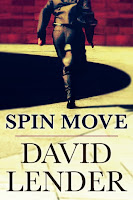
It’s a year after Rudiger and Katie’s tryst in New York, and now the Antiguan officials are demanding ever more exorbitant payouts to maintain his cover. He’s running out of money, in part because Katie conned him out of millions. Katie is holed up with her ailing father in Cape Verde, an Island paradise off the coast of Africa that conveniently lacks an extradition treaty with the U.S., an idea she took right out of Rudiger’s playbook. Despite her double cross, Rudiger is still hot for Katie, and he knows just where to find her when he leaves Antigua. But U.S. Attorney Charlie Holden is still hovering in the background, dead set on catching them both.  Even worse, Katie’s been sucked in by a crooked Swiss banker and he’s conned her out of Rudiger’s money. Can they get it back and escape before it’s too late?


Buy Spin Move:   Buy US  Buy UK


Monday, March 18, 2013

Styles' Petfinder Post

I found Styles, our 2 1/2 year old adopted pitbull's, original Petfinder post yesterday when I was clearing out some old bookmarked links.  He was five months old at the time, living in a rescue shelter.  His picture made me laugh as much as it did when I first saw it; because of that I insisted we meet him even though our original reason for going to the shelter was to see another puppy.

After I rediscovered the link I emailed it to Manette and Zac, who read it on their iPhones while in the car.  They both got choked up.  Here it is:


If you can't read it in the JPEG I inserted, the text is:

"What can we say about Styles??!!!  He is just the life of the party and a little ham. This is a pup that you just have to meet. He is so sweet, playful, eager to please, and so much fun to be around. This little guy is just loving life. He is housebroken, dog friendly (although he needs a dog that can handle rough play). He is 100% social and ready to see the world. He is very eager to please and learn. He attends a weekly obedience class where he is handled by teenagers and has a blast."

I had forgotten what the post said, but whoever wrote it left out the part about bed-hogging, obsession with balls, and having only two speeds--flat out and asleep--but aside from that they had him pegged.

At this point none of us can imagine our lives without him.  Thank God for rescue shelters.

Sunday, December 16, 2012

Victorian Christmas


Every year or so during the Christmas season, I try to return to the small town of Mt. Tabor in northern New Jersey where I grew up.  Not only does it bring back memories from my childhood, but the town itself hasn't changed much since the Victorian era, so it’s like walking into a Victorian Christmas.
Mt. Tabor, NJ

Mt. Tabor was founded in 1869 by the Methodist church as one of two camp meeting grounds in New Jersey for outdoor summer religious retreats.  The Methodist faithful would pitch tents and camp out in either Mt. Tabor or Ocean Grove for the month of August to study the Bible, attend revival meetings, and hear sermons and religious lectures.  In time, the revelers built cottages on the 16’ x 25' tent lots and Mt. Tabor soon became a summer resort.  Eventually the cottages were winterized, which led to a year-round community.  Many of the original cottages still exist today.  Homes in the old section of town are covered with Victorian filigree, trim and railings and many are still painted with bold complementary colors true to the Victorian era.

Mt. Tabor is still a hilltop community of about 1,000 people with beautiful wooded streets, 15 MPH speed limits, its own nine-hole golf course—the former farm of Stephan Dickerson, who sold the property to the Methodists in 1869 and whose descendants still live in town—basketball courts, a playground, a baseball diamond and Mt. Tabor School, to which I walked across town as a child, as do the children today.  It was a special place, and still is.

But for most of us, the Christmas season was the most special.  Christmas decorations were a tradition in town; not the Santa Claus and reindeer variety, but white and multi-colored lights adorning the angular peaks, gingerbread and railings of the Victorian homes.  There was no rulebook that said you had to participate, but almost every household did its part to decorate the town.

In our family, trimming the outside of the house was as much an annual ritual as decorating the Christmas tree.  We’d march up to the attic and bring down all the lights, then crawl under the porch to drag out the ladder.  Dad would direct us to our stations, then climb the ladder and my three brothers and I would feed the strings of lights along like a bucket brigade, Paul, the youngest behind me, Jon ahead of me, and Mark, the oldest, a "big kid" with his feet two rungs up on the ladder.  By the time we got back inside hours later, the house was warm from the fire and Mom had Andy Williams, Burl Ives and Tony Bennett singing Christmas songs on the record player.  The house smelled like fireplace smoke, pine from the Christmas tree, and cinnamon and cloves from the hot mulled cider Mom had ready for us.  After a snack and Christmas cookies with the hot cider, we'd tackle decorating the Christmas tree.

I'm sure it didn't snow for some Christmases, although my memory is a blank for those, as I always remember walking around town on snow-covered streets with my family to take in the lights, and to participate in groups of Christmas carolers performing for the neighbors.  It had an aura of something from Charles Dickens’ era: the crunch of snow underfoot, Oh Come All Ye Faithful wafting from a few blocks away from another group of carolers, and our noses and fingers stinging from the cold air.  I always half expected to see Scrooge, after his evening transformation by the ghosts, with Tiny Tim beside him, walk around the corner.

On those caroling evenings we were frequently invited inside for hot chocolate by the neighbors.  Maybe people would think that's corny today, but it still goes on.

Another tradition was sledding (we called it “sleigh riding”) and tobogganing on the golf course.  The fourth green, sacred ground that couldn’t be tread upon by kids in summer, was always made available to us in winter as a perfect launching pad for our rides.  You could even find Chas Fouquet, the most obsessive golfer in town, helping to give our sleds that initial push across the expanse of the green to build up speed for a breathtaking run down the hill to the long slope of the third fairway.  There was also a rite of passage at about the fifth or sixth grade that advanced you to taking runs down "Bloody Guts", the 45-degree bone-crushing hill from the tee down to the sixth green over rocks, nasty tree stumps and a stream bed that would eat you alive if you didn't properly negotiate the four-foot-wide bridge across it.

As I write this I've decided I'm going back to Mt. Tabor this year to walk around town to take in the Christmas lights.  Hopefully snow will cover the streets, as it should.  Most things in our lives change, but Mt. Tabor will always hold, for those of us who grew up there, the ability to transport us into the past by virtue of its retention of the traditions of old.  I wish you all happy holidays with the hope you have an opportunity to revisit some of your own traditions of the season, and that your memories of former holidays are as precious as mine.